Nanjing Chemical Material Corp.
Service
Products

Glycolic Acid Cream Benefits Glycolic Acid Cream Benefits

Glycolic acid is the most common type of alpha-hydroxy acid AHAs and is a pure natural derivative of sugar cane. Citric acid from lemon, citrus and grapefruit extracts is also considered glycolic acid and is often used in facial and body exfoliating products.

Applying glycolic acid kills bacteria and opens up pores, making acne easy to remove. In this regard, the essence becomes more permeable, the microdermabrasion becomes more effective, and other skin care products penetrate better into the skin.

Glycolic acid also brings natural moisture to where it is most needed on the surface of the skin.

Unlike other alpha-hydroxy acid AHAs, glycolic acid works well throughout the skin care system. From cleansing creams to moisturizers to once-a-week skin care, glycolic acid works great in rejuvenating, revitalizing and moisturizing.

Using a skin care product containing glycolic acid will make your skin softer, smoother and more radiant. You may experience a "peeling" process, and after a few days, a healthier new cortex will appear.

Glycolic acid is a completely natural method of treating acne. It comes from fruit and is very similar to citric acid. Essentially, it reduces adhesions between the skin. Once they relax, the skin can be kept at a certain distance, allowing new skin to begin to grow. This is the strength of the above three fatty acids, they can all be classified in the α-hydroxy acid (fruit acid) family.

Because of its high acidity, glycolic acid has the effect of exfoliating. When applied to the skin as an exfoliating gel and lotion, glycolic acid penetrates and damages the upper layers of the skin, destroying the gums that carry dead cells. After the dead skin is chemically stripped, other ingredients can counteract and remove the retained acid. This way will make the skin look smoother and younger.

Another role of glycolic acid is to provide moisturization to the skin that has just been exfoliated.


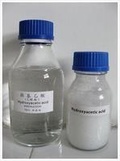
Glycolic acid
Related Products Wiki
  • Cationic Surfactants Commonly Used in Detergents

    Cationic Surfactants Commonly Used in Detergents

    January 15, 2021Cationic surfactants are components with good bactericidal, algaecidal, antifungal, softening, anti-static and conditioning properties. The roles in detergents are: softener, biocide, antistatic, cond...view
  • Analysis of the Significance of the Polyether Polyol Cas Number Technology

    Analysis of the Significance of the Polyether Polyol Cas Number Technology

    January 11, 2022Polyether polyol cas number is one of the most commonly used chemical materials. The technical indicators of polyether include hydroxyl value, acid value, moisture and so on. In general, manufacturers...view
  • China Expandable Microsphere Foaming Agent

    China Expandable Microsphere Foaming Agent

    August 22, 2024China expandable microspheres foaming agent is a new type of special foaming agent, which is a milky white, small spherical plastic particle with a diameter of 10-45 microns. When heated to a certain ...view
  • Commonly Used Amphoteric Surfactants in Detergents

    Commonly Used Amphoteric Surfactants in Detergents

    May 9, 2025In our daily laundry and dishwashing, detergents are our good helpers. However, the components inside that small bottle of detergent contain a lot of knowledge. Today, let's delve into the "l...view
  • The Latest Applications of 1,3-Propane Sultone

    The Latest Applications of 1,3-Propane Sultone

    September 24, 20201,3-propane sultone is a colorless liquid or white crystal. Its latest applications are as follows:1. Sulfonating AgentIt is widely used in pharmaceutical and chemical industry, photosensitive materia...view
  • Anionic Surfactant: LAS

    Anionic Surfactant: LAS

    March 22, 2022Common examples of such active agents are sodium straight-chain alkyl benzene sulfonates and sodium alpha-alkenyl sulfonates. Sodium Linear Alkyl Benzene Sulfonate, also known as LAS, is a white or li...view
Related Products
  • Propionaldehyde Product InformationProduct Name: PropionaldehydeChemical Formula: C3H6OCAS No.: 123-38-6Dangerous Grade: 3Technical Data:ItemsSpecificationsAppearanceColorless liquid with no visible impuritiesPurity...
  • Glutaraldehyde Product InformationProduct Name: GlutaraldehydeChemical Formula: C5H8O2CAS No.: 111-30-8Dangerous Grade: 8Technical Data:ITEMSINDEXRESULTSAppearance (25℃)Colorless to light yellow oilytransparent liq...
  • Polyethylene Glycol Product InformationProduct Name: Polyethylene Glycol 400 Chemical Formula: CAS No.: 25322-68-3Dangerous Grade: Technical Data:ITEMSSPECIFICATIONHydroxyl Number as mgKOH/g 267-295pH (5% Aq.solution) a...
  • Butyl methacrylate CAS No.: 97-88-1Assay: ≥99.5%Packing: 180kg/barrel
  • TEL:+86-25-52337978
  • EMAIL: info@njchm.com
  • ADDRESS:12/F, Block B, Technology and Innovation Building, Nanjing University of Technology, No.5 New Model Road, Nanjing 210009, China