Nanjing Chemical Material Corp.
Service
Products

Glycolic Acid Cream Benefits Glycolic Acid Cream Benefits

Glycolic acid is the most common type of alpha-hydroxy acid AHAs and is a pure natural derivative of sugar cane. Citric acid from lemon, citrus and grapefruit extracts is also considered glycolic acid and is often used in facial and body exfoliating products.

Applying glycolic acid kills bacteria and opens up pores, making acne easy to remove. In this regard, the essence becomes more permeable, the microdermabrasion becomes more effective, and other skin care products penetrate better into the skin.

Glycolic acid also brings natural moisture to where it is most needed on the surface of the skin.

Unlike other alpha-hydroxy acid AHAs, glycolic acid works well throughout the skin care system. From cleansing creams to moisturizers to once-a-week skin care, glycolic acid works great in rejuvenating, revitalizing and moisturizing.

Using a skin care product containing glycolic acid will make your skin softer, smoother and more radiant. You may experience a "peeling" process, and after a few days, a healthier new cortex will appear.

Glycolic acid is a completely natural method of treating acne. It comes from fruit and is very similar to citric acid. Essentially, it reduces adhesions between the skin. Once they relax, the skin can be kept at a certain distance, allowing new skin to begin to grow. This is the strength of the above three fatty acids, they can all be classified in the α-hydroxy acid (fruit acid) family.

Because of its high acidity, glycolic acid has the effect of exfoliating. When applied to the skin as an exfoliating gel and lotion, glycolic acid penetrates and damages the upper layers of the skin, destroying the gums that carry dead cells. After the dead skin is chemically stripped, other ingredients can counteract and remove the retained acid. This way will make the skin look smoother and younger.

Another role of glycolic acid is to provide moisturization to the skin that has just been exfoliated.


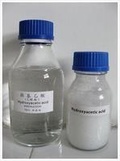
Glycolic acid
Related Products Wiki
  • Application of 3-Methacryloxypropyltrimethoxysilane

    Application of 3-Methacryloxypropyltrimethoxysilane

    September 24, 20203-Methacryloxypropyltrimethoxysilane is a colorless or light-yellow transparent liquid, soluble in acetone and benzene, but insoluble in water. It is stable at the normal temperature and pressure, and...view
  • Precautions for Propionyl Chloride

    Precautions for Propionyl Chloride

    August 25, 2020The following points should be noted when using propionyl chloride in China1. Overview of hazardsHealth hazard: its vapor has a strong irritation to respiratory tract and eyes, and causes cough and dy...view
  • Polymer polyol

    Polymer polyol

    July 19, 2024Polymer polyol, also known as vinyl polymer graft polyether polyol, referred to as POP, the appearance is generally white or light milky yellow, is a kind of polyol containing organic fillers, which c...view
  • Safety Precautions When Handling and Storing 1,2-Epoxybutane

    Safety Precautions When Handling and Storing 1,2-Epoxybutane

    January 26, 2024When working with chemicals, it is essential to prioritize safety to prevent accidents and potential hazards. 1,2-buteneoxide, a common chemical compound, requires specific precautions due to its pote...view
  • Application of Expandable Microspheres

    Application of Expandable Microspheres

    April 29, 2019Expanded microspheres (also known as foamed microspheres) are high molecular polymers.view
  • The Preparation Method of Bronopol

    The Preparation Method of Bronopol

    October 30, 2020Bronopol can be obtained by two reactions of alkanes hydroxylation and bromination with nitromethane and formaldehyde as raw materials and under alkaline conditions. The reaction equations are as foll...view
Related Products
  • TEL:+86-25-52337978
  • EMAIL: info@njchm.com
  • ADDRESS:12/F, Block B, Technology and Innovation Building, Nanjing University of Technology, No.5 New Model Road, Nanjing 210009, China