Nanjing Chemical Material Corp.

Selecting the right chemical raw material supplier is essential for companies involved in pharmaceutical intermediates, organic synthesis, and specialty chemical manufacturing. Among acid chloride compounds, propionyl chloride is widely used because of its high reactivity and versatility in chemical reactions.
However, purchasing propionyl chloride requires more than checking product availability or price. Buyers need to evaluate purity, specifications, packaging, storage conditions, documentation, and supplier capabilities to ensure stable production and safe handling.
Nanjing Chemical Material Co., Ltd. (NJCHM) provides professional chemical supply solutions for global customers, supporting manufacturers with reliable raw materials, quality documentation, and supply chain services. Understanding the key purchasing factors can help companies reduce procurement risks and select the right chemical partner.
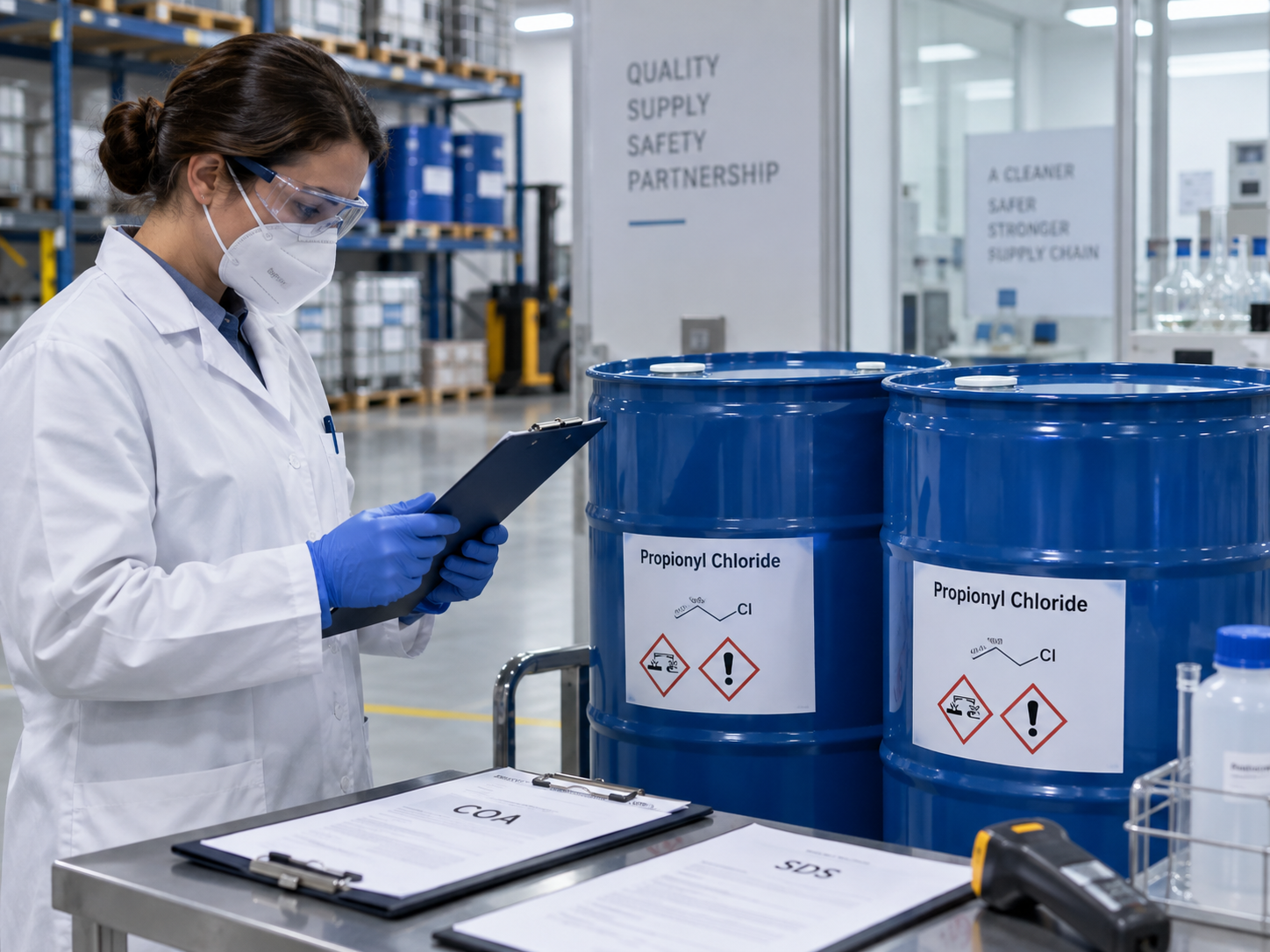
Propionyl chloride is a reactive acid chloride commonly used as an acylating reagent in organic synthesis. Due to its chemical characteristics, it requires stricter procurement and handling management compared with many conventional industrial chemicals.
One of the main challenges is its sensitivity to moisture. Exposure to unsuitable storage conditions may affect product stability and create safety concerns during handling.
For manufacturers purchasing propionyl chloride, supplier capability plays an important role. A professional supplier should not only provide consistent product quality but also offer proper packaging, technical documents, and transportation support.
Compared with standard chemical raw materials, propionyl chloride purchasing requires closer attention to the entire supply chain, from production and inspection to delivery and storage.
Before placing an order, buyers should confirm the technical specifications that directly influence product performance and application results.
| Specification | Importance |
| Purity | Affects reaction efficiency and final product consistency |
| CAS Number | Confirms chemical identity |
| Appearance | Helps verify product quality |
| Moisture content | Important because acid chlorides are moisture-sensitive |
| Packaging type | Ensures safe storage and transportation |
The CAS number of propionyl chloride is 79-03-8, which helps manufacturers confirm the exact chemical material during purchasing.
Different applications may require different quality standards. For example, pharmaceutical-related synthesis often requires stricter quality control compared with general chemical applications.
NJCHM provides detailed product information and technical support to help customers evaluate specifications before procurement.
Proper packaging and storage are critical factors for maintaining propionyl chloride quality throughout transportation and inventory management.
Because propionyl chloride reacts with moisture, it should be stored in sealed chemical-resistant containers under suitable conditions. During international transportation, packaging must also protect the product from environmental exposure and handling risks.
Manufacturers should consider several storage factors:
Airtight and secure packaging
Dry storage environment
Appropriate temperature control
Clear product labeling
For global buyers, packaging quality can directly influence product stability after long-distance transportation. Working with suppliers experienced in chemical packaging helps reduce potential issues during delivery.
Documentation is an important part of chemical procurement because it allows buyers to verify product quality and meet internal compliance requirements.
A qualified supplier should provide complete technical documents, including:
Certificate of Analysis (COA)
Safety Data Sheet (SDS)
Product specifications
Batch quality information
These documents help manufacturers confirm that the delivered material matches their production requirements.
For companies researching propionyl chloride uses, understanding the intended application is also important when selecting product specifications. Different industries may have different expectations regarding purity, testing standards, and documentation.
NJCHM supports customers by providing professional chemical information and quality documentation to improve procurement transparency.
Selecting a reliable supplier is one of the most important steps in chemical purchasing. Product quality, documentation, and logistics capability all influence long-term supply stability.
When evaluating suppliers, buyers should consider:
Production capability and quality control systems
Experience with chemical transportation
Ability to provide consistent batches
Technical communication and customer support
In addition, buyers should prepare clear RFQs that include required quantity, packaging requirements, destination, delivery schedule, and documentation needs.
For technical teams evaluating manufacturing processes, understanding propionyl chloride synthesis information can also help determine whether a supplier has sufficient technical knowledge and product expertise.
NJCHM focuses on providing reliable chemical materials and supporting customers with stable supply solutions, professional service, and quality management.
For companies purchasing reactive chemical materials, supplier selection affects not only product quality but also production efficiency and operational safety.
A reliable chemical partner should provide more than raw materials. They should support customers through stable supply capability, professional technical communication, complete documentation, safe packaging solutions, and long-term cooperation support.
NJCHM works with global customers by providing chemical solutions designed to meet different application requirements. Through professional quality management and supply experience, the company helps manufacturers reduce procurement uncertainty.
Choosing the right supplier allows companies to maintain consistent production while improving supply chain reliability.
Purchasing propionyl chloride requires careful evaluation of purity, specifications, packaging, storage, documentation, and supplier capability. Because of its reactive characteristics, working with an experienced chemical supplier is essential for maintaining product quality and safety. NJCHM provides reliable propionyl chloride solutions with professional support, quality documentation, and stable supply capabilities to help global manufacturers achieve efficient and secure chemical procurement.
Propionyl chloride is commonly used in organic synthesis, pharmaceutical intermediates, and chemical manufacturing processes.
Because it is moisture-sensitive and reactive, proper storage helps maintain stability and safe handling.
Buyers should request COA, SDS, specifications, and batch quality information.
Quality can be evaluated through purity data, testing documents, and supplier quality systems.
Purity, packaging, transportation, documentation, and supplier reliability are key factors.
Companies should evaluate manufacturing capability, quality control, technical support, and supply stability.