Nanjing Chemical Material Corp.

Polyurethane (PU) foam manufacturers need to carefully select raw materials because polyol properties directly influence foam structure, flexibility, density, strength, and final product performance. Among different polyol grades, Polyether Polyol is widely used in flexible foam, rigid foam, elastomers, adhesives, and other polyurethane applications.
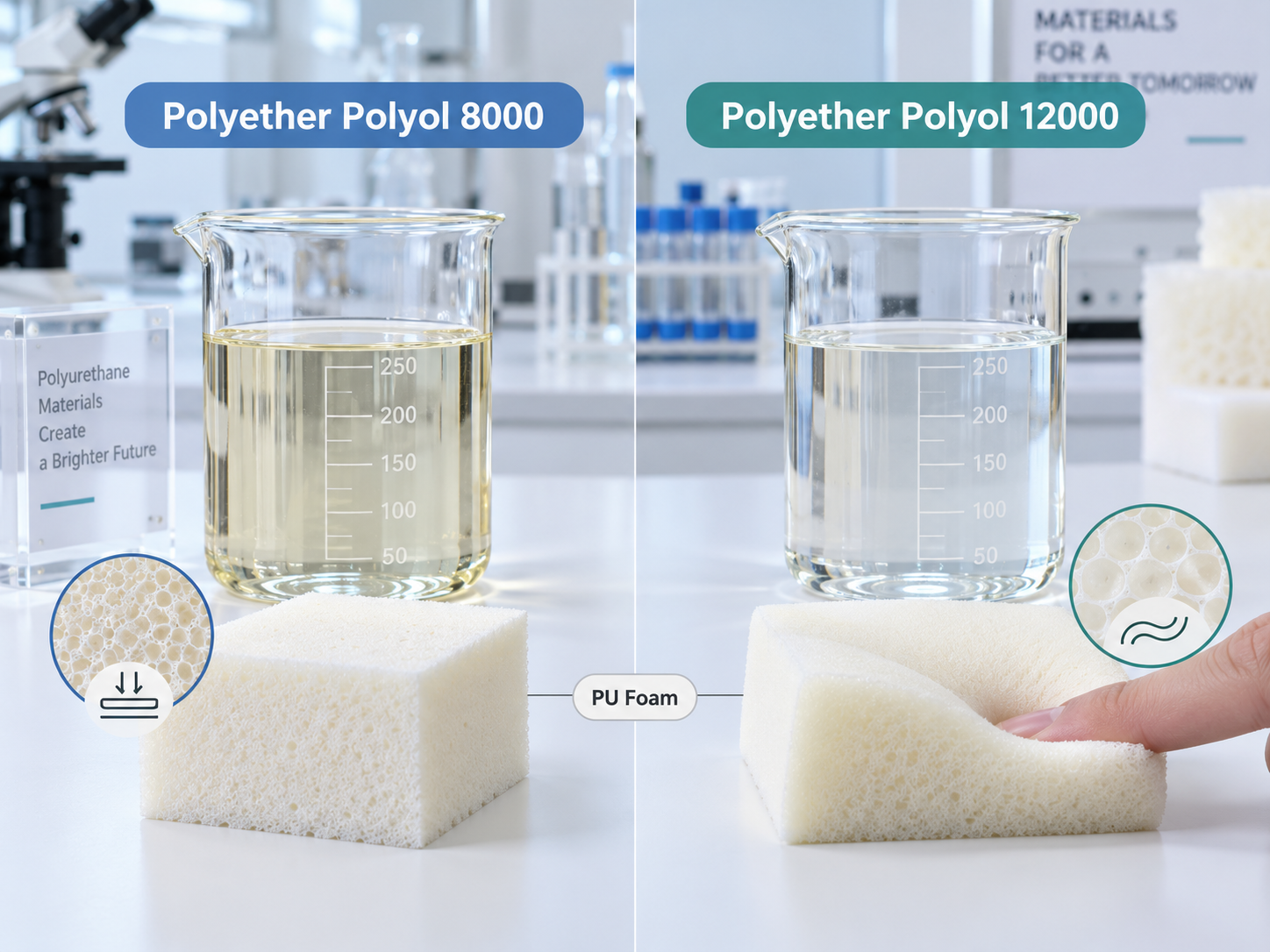
When comparing Polyol 8000 and Polyol 12000, the main differences are related to molecular weight, hydroxyl value, viscosity, and formulation compatibility. Choosing the wrong polyol grade may affect processing efficiency and the performance of the final PU foam product.
Nanjing Chemical Material Co., Ltd. (NJCHM) supplies reliable chemical materials for global manufacturers, helping customers select suitable polyurethane raw materials according to application requirements. Understanding the relationship between polyol properties and foam performance can help buyers make better procurement decisions.
Polyether polyol grades are usually identified by their molecular weight, which is an important factor affecting polyurethane formulation performance.
A higher molecular weight polyol generally contains longer polymer chains and fewer hydroxyl groups per unit weight. This can influence foam flexibility, reaction behavior, and mechanical properties.
Polyol 8000 and Polyol 12000 are commonly compared because they represent different molecular weight ranges that may be suitable for different PU foam applications.
In general:
Lower molecular weight polyols may provide higher crosslinking potential and stronger rigidity.
Higher molecular weight polyols may contribute to improved flexibility and softer foam structures.
For manufacturers researching polyether polyol uses, understanding these differences is important because different industries require different foam characteristics.
The selection between Polyol 8000 and Polyol 12000 depends on the required balance between flexibility, strength, processing behavior, and final application performance.
| Feature | Polyol 8000 | Polyol 12000 |
| Molecular weight | Lower | Higher |
| Hydroxyl value | Relatively higher | Relatively lower |
| Chain length | Shorter polymer chains | Longer polymer chains |
| Foam characteristics | Higher rigidity and strength potential | Better flexibility and softness |
| Typical applications | Structural foam, applications requiring higher hardness | Flexible foam and applications requiring elasticity |
Although molecular weight is an important factor, manufacturers should also consider viscosity, hydroxyl value, water content, and compatibility with other formulation components.
NJCHM supports customers by providing professional chemical information and helping buyers select suitable polyol grades according to their production requirements.
The performance of polyurethane foam depends heavily on the chemical characteristics of polyols.
Important parameters include:
Molecular weight: Influences polymer chain length and foam flexibility.
Hydroxyl value (OH value): Affects reaction ratio with isocyanates and crosslinking density.
Functionality: Determines the number of reactive hydroxyl groups available during polyurethane formation.
A polyol with different molecular weight and OH value can create significant differences in foam structure.
For example, higher molecular weight polyols generally produce softer and more flexible foam because longer polymer chains create greater mobility within the polyurethane network.
On the other hand, polyols with higher hydroxyl values may increase crosslink density, which can improve hardness and dimensional stability.
Therefore, manufacturers should evaluate the complete formulation instead of selecting a polyol only based on molecular weight.
Besides molecular weight and hydroxyl value, physical and chemical properties also influence production efficiency.
Viscosity affects:
Mixing performance
Pumping ability
Processing temperature requirements
Equipment compatibility
Water content is another important parameter because water reacts with isocyanate during PU foam production and influences carbon dioxide generation and foam expansion.
Acid value may also affect formulation stability and reaction performance.
Before purchasing, manufacturers should review technical specifications and confirm whether the selected polyol matches their equipment and formulation system.
For companies comparing different polyurethane materials, understanding polyester polyol vs polyether polyol can also help determine which material is more suitable for specific applications.
Selecting the right polyol supplier requires evaluating both product performance and supply capability.
Before sending an RFQ, buyers should prepare information including:
Target PU foam application
Required hardness or flexibility
Production process
Required quantity
Packaging requirements
A qualified supplier should provide technical documents, product specifications, and application support.
When evaluating polyether polyol suppliers, manufacturers should also confirm product consistency, quality control procedures, and delivery capability.
NJCHM provides chemical supply solutions for global customers and supports manufacturers with reliable raw materials and professional technical communication.
There is no single polyol grade suitable for every polyurethane application. The best choice depends on foam structure, processing conditions, and required final properties.
For example, flexible foam manufacturers may prioritize elasticity and comfort, while rigid foam producers may focus on strength, insulation performance, and dimensional stability.
Understanding technical parameters such as molecular weight, hydroxyl value, and viscosity allows manufacturers to optimize formulations and reduce production risks.
For buyers checking chemical specifications, confirming details such as the polyether polyol CAS number can also help ensure correct material selection and regulatory compliance.
NJCHM works with customers to provide suitable chemical solutions and support stable polyurethane production.
Choosing between Polyol 8000 and Polyol 12000 requires a clear understanding of molecular weight, hydroxyl value, viscosity, and application requirements. Different polyether polyol grades can significantly influence PU foam flexibility, strength, and processing performance. By evaluating formulation needs and working with an experienced supplier like NJCHM, manufacturers can select suitable raw materials and achieve more consistent polyurethane product quality.
Polyether polyol is widely used in polyurethane foam, coatings, adhesives, elastomers, and other PU applications.
Not necessarily. The better choice depends on the required foam properties and production requirements.
Molecular weight influences chain length, flexibility, and mechanical properties of polyurethane foam.
Hydroxyl value affects reaction activity and crosslinking during polyurethane formation.
Buyers should provide application details, required specifications, quantity, and packaging requirements.
Manufacturers should evaluate product quality, technical support, production capability, and supply stability.